

As I mentioned in the first post, my goal here is to provide supplementary material, not a comprehensive review. So:
The main character in this episode is Benedict Arnold. He takes Fort Ticonderoga in 1775, which is one of the most important Patriot victories early in the war, and then he leads a difficult and ultimately failed expedition to Canada in 1776.
The narrator tells us that Arnold “was descended from a distinguished New England family that had fallen on hard times.” He doesn’t provide any additional details, though, so let me try.
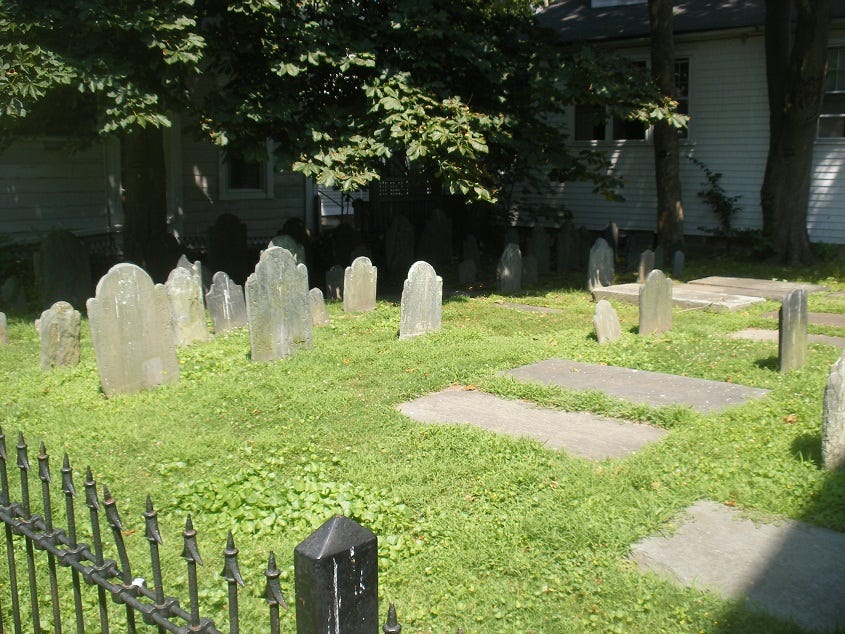
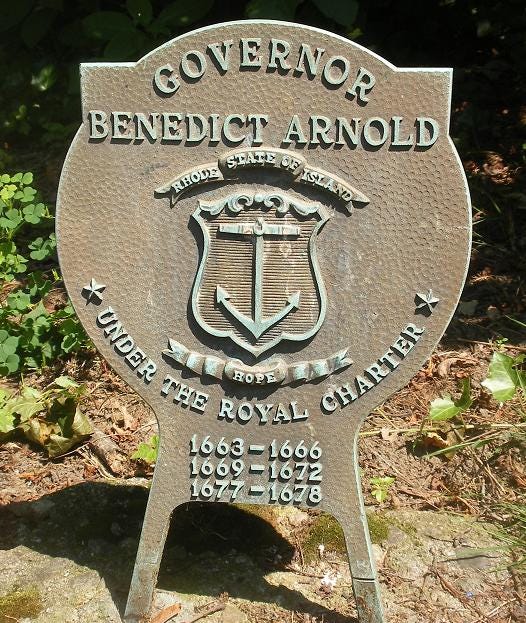
The Arnold family was from Newport, Rhode Island, and it was distinguished because Arnold’s great-grandfather had been the first Governor of the Colony of Rhode Island under the Royal Charter. Confusingly (or helpfully, I guess) he was also named Benedict. He served as governor from 1663 to 1666 and then twice more in the next dozen years. You can visit the governor’s grave, as well as the graves of many of Arnold’s other ancestors, at the Arnold Burying Ground in Newport. It’s a small plot that for many years had been covered up, but in 1949 it was restored to what you see in these pictures:
By the time the famous Benedict Arnold was born, his branch of the family had relocated to Norwich, Connecticut. And obviously he is not buried in Newport—he’s in St. Mary’s Church, Battersea, London.
The Arnold Burying Ground sits on what was then Arnold family land, a strip that extended from the wharves up the hill to Touro Park. That kind of land arrangement was common in New England colonial port towns: access to the wharves was what mattered, so those were divvied up into small pieces. Those pieces in turn formed the distance between streets. Here’s a zoomed in version of this 1777 map of Newport that shows the strips of land that extend from the wharves up the hill behind:
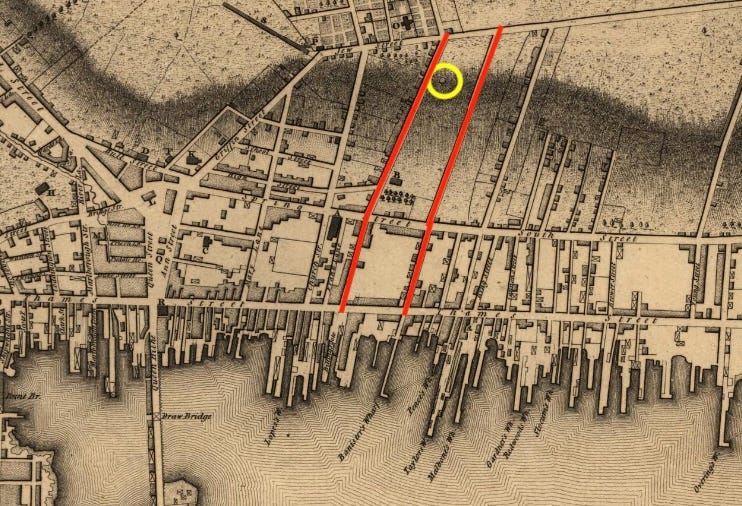
The red lines demarcate the Arnold family’s original in-town landholdings. The yellow circle encloses the Old Stone Mill, which is a Newport landmark:
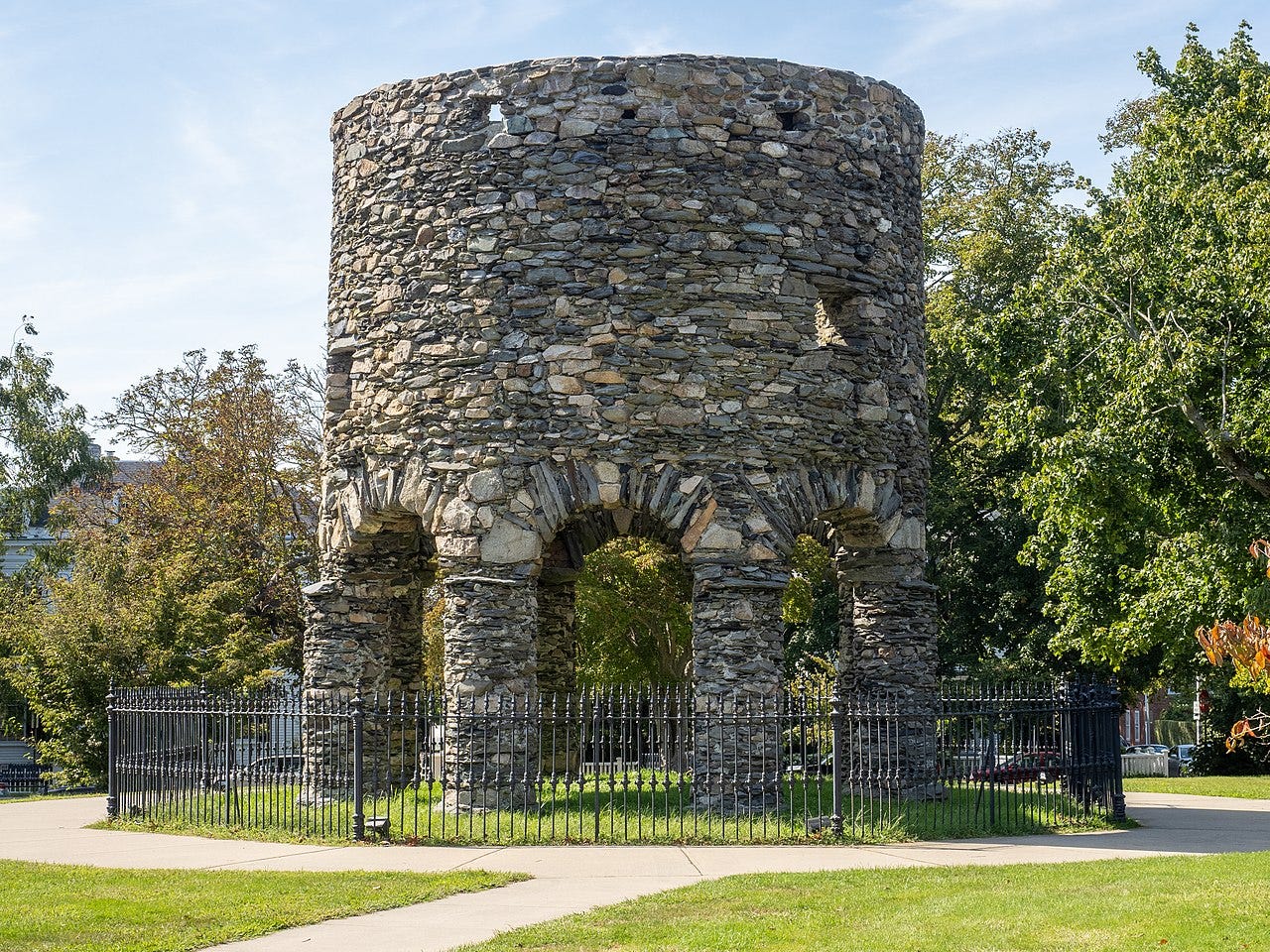
There’s a nearby museum that claims the “Newport Tower” is evidence of pre-Columbian contact—i.e. that it was built by the Vikings, or the Chinese, or medieval knights … or aliens. Bah. It’s actually the remains of the Arnold family’s seventeenth-century windmill.
I was impressed by the way the episode handled the challenges that the British faced in conducting a counterinsurgency campaign across a large ocean in an unpopular war. Here at the Naval War College, we sometimes use that kind of framing in our classes, and the students tend to “get it” without much trouble. After all, many of them spent time in Iraq and Afghanistan conducting operations not all that dissimilar from what the British army and navy were trying to do in the years before the French entered the American Revolution.