Part One is here:

After Jane Austen’s father died, the rectory in Steventon passed to the next rector, his son James. Three of the brothers then gave their mother about £200 a year. Cassandra and Jane were given nothing more. They moved for five years to Bath, which Jane hated, and traveled among other extended family homes before Edward at last made the offer of one of two houses—the first in Wye or the second in Chawton. The daughters persuaded their mother to choose the more familiar Chawton, with its garden, outhouses, six bedrooms, and garrets, and they moved there in July 1809. Jane lived and worked in the Chawton Cottage for eight years. At the end of her life she went to Winchester for medical care. She died there and is buried in Winchester Cathedral.
It is misleading to say that she wrote all of her novels in Chawton.
Let’s look back. Jane, born in 1775, wrote constantly as a girl. After her extensive juvenilia she wrote Elinor and Marriane and First Impressions (later this became Pride and Prejudice), returned to a second draft of Elinor and Marianne and renamed it Sense and Sensibility, and then wrote the first draft of what would become Northanger Abbey. By then she was twenty-three. Her father thought so well of First Impressions he tried to get it published but the publisher wouldn’t look at it.
But in the next decade the momentum of writing had to ease. She spent a great portion of her time caring for nieces, nephews, cousins, and cousins in labor or recovering the weeks afterwards. She turned down two marriage proposals, the first unwanted and the second accepted until a sleepless night followed. The next morning she asked to speak to the large landowning suitor, a gentleman, the younger brother of her close friends, and explained she had changed her mind.
It was a decade later that she, Cassandra, and their mother moved into Chawton Cottage. She was 33. She could revise and write anew. So she settled into this charming cottage in a quiet village in Hampshire and published Sense and Sensibility, revised First Impressions into Pride and Prejudice and published it, and then finished or wrote Mansfield Park, Emma, Persuasion, Northanger Abbey, and the first twelve chapters of Sanditon. By my count, six-and-a-half manuscripts in eight years.
I am reminded of John Keats’ miracle year of 1819 (two years after Jane died). He wrote five of his six great odes, “The Eve of St. Agnes,” and “Lamia.” Let us also reference Patrick O’Brian’s output—after his other biographies and stories prior to 1969, he wrote twenty-one novels about Jack and Stephen in only thirty years.
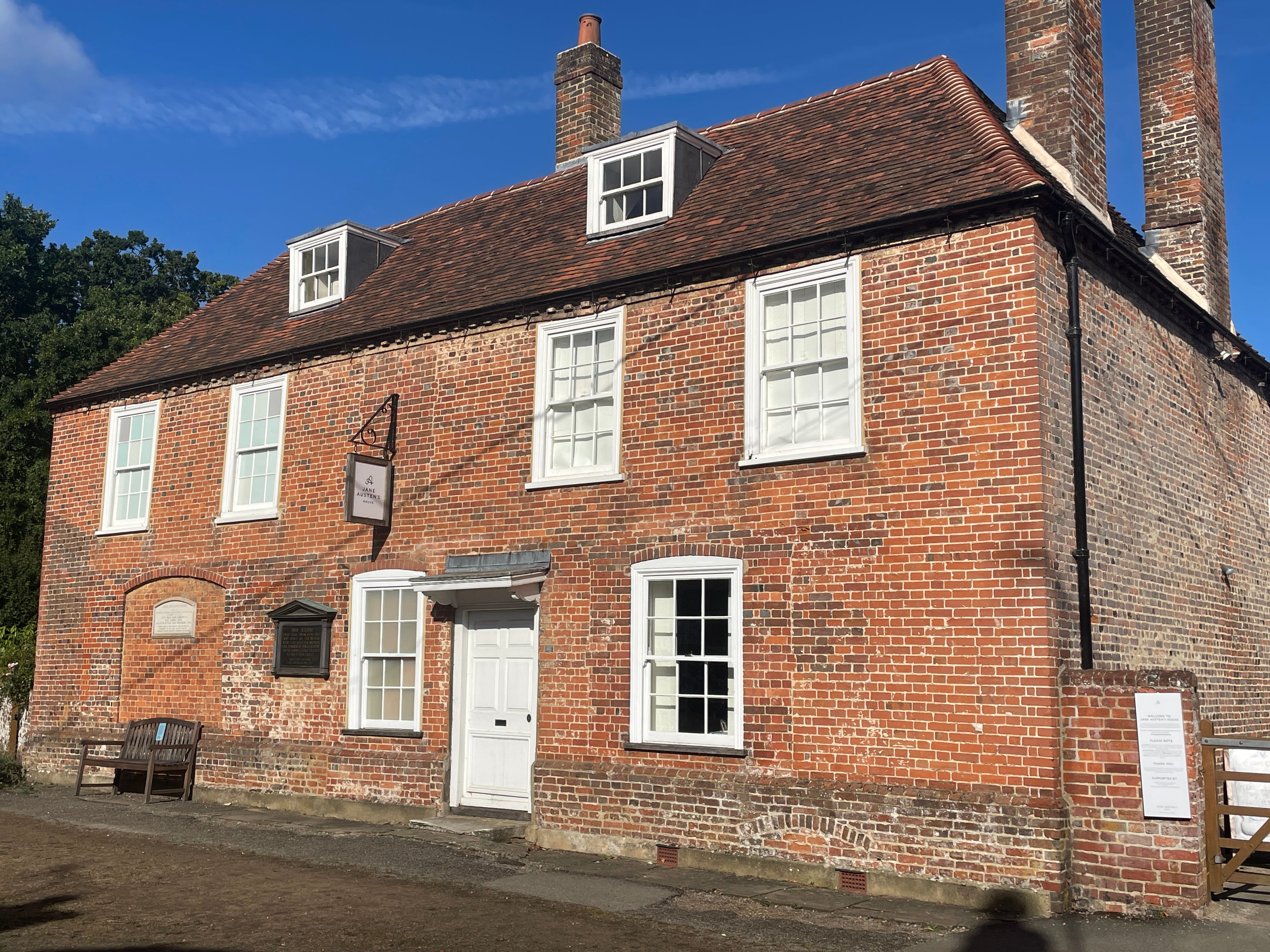
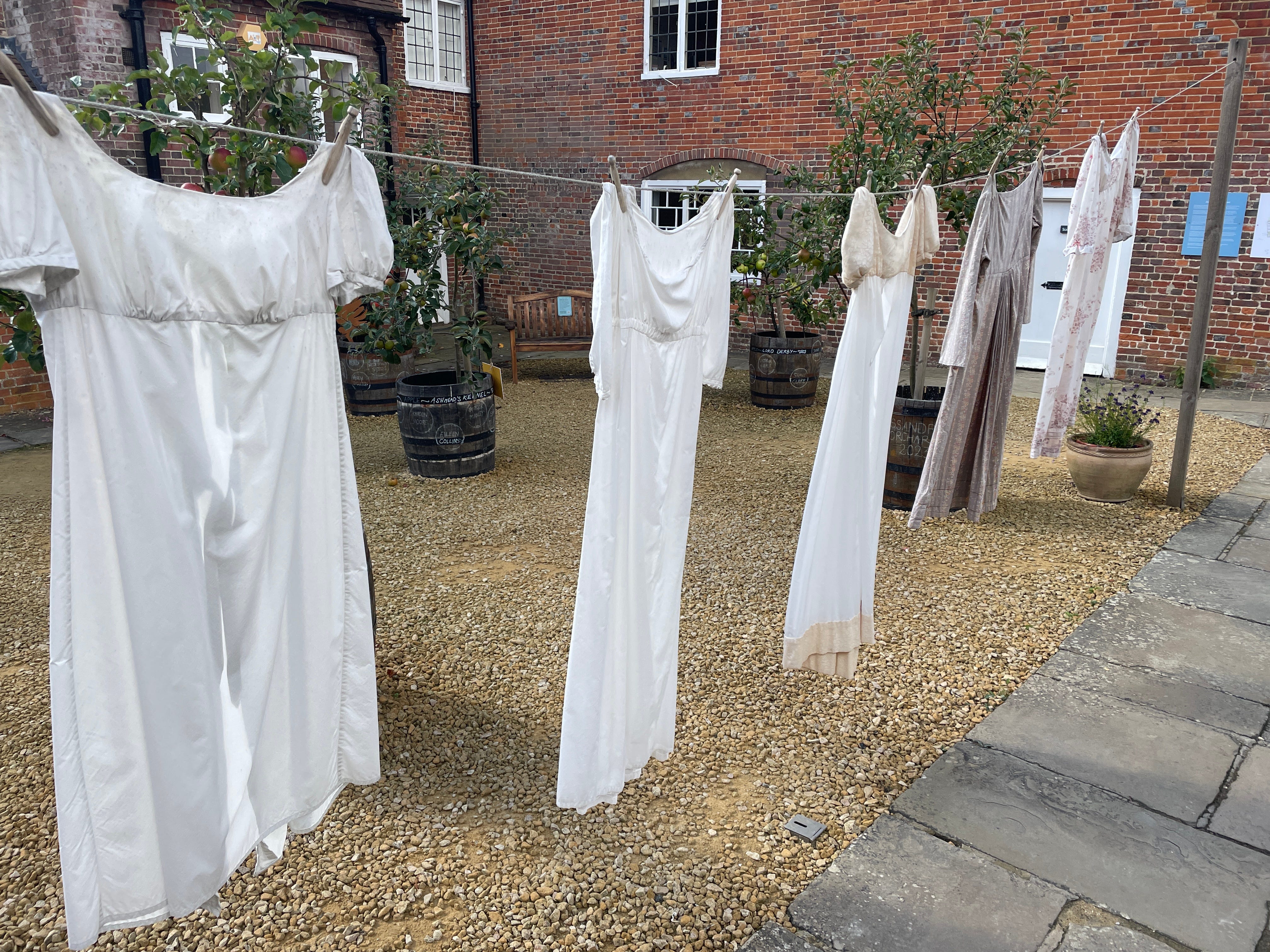
The cottage impresses. As now seems ubiquitous in museums these days, the visitors’ traffic begins in the gift shop but then moves outdoors, on this a sunny Hampshire morning, to five dresses hanging on a line, a place to make bonnets, and multiple beds of flowers with riddles modeled after those in Emma.
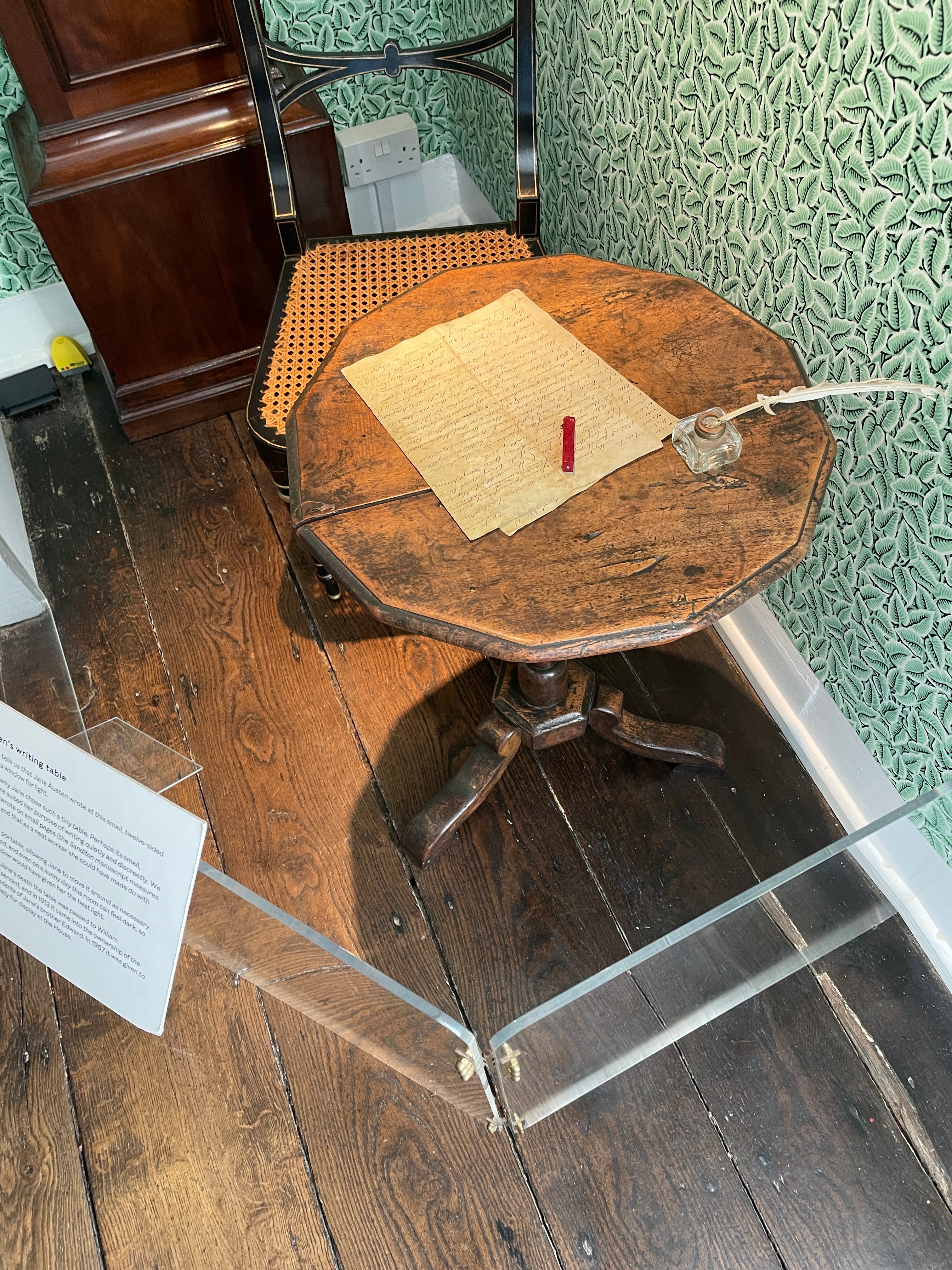
Inside, any contemporary writer must feel appalled by the tiny space Austen used to write – a simple round table with a chair, tucked in the corner of a sitting room used by others, parchment, ink, and quill nearby.
An entire room is devoted to Cassandra’s watercolours. Upstairs hangs a painting of Charles’s victory in the Canopus at the Battle of Santa Domingo, as well as his portrait as Rear Admiral, and Francis’s portrait as Admiral of the White. As narrated in Persuasion, Jane Austen admired their courage and leadership and always made a strong defense of the Navy; she lived long enough to see Napoleon’s defeat.

Knowing their audience, even among avid readers of Austen, the cottage devotes an entire room to film history, including the manuscript of Emma Thompson and Ang Lee’s film of Sense and Sensibility. The year 1995 was Annus Mirabilis for Austen films—Clueless, the aforementioned Sense and Sensibility, Persuasion with Amanda Root and Ciaran Hinds, and the six-part adaption of Pride and Prejudice with Jennifer Ehle and Colin Firth. Prior to 1995 the only film of Jane Austen was the 1940 Pride and Prejudice with Greer Larsen and Laurance Olivier. There have been over eight films since 1995, but 1995 nearly deserves a room of its own.
In the upstairs bedroom the four-poster displayed a measure of status, and its hanging fabric was pretty. The mattress was tiny, the pink nightdress laid on it for a small woman indeed. The other upstairs rooms boast innumerable memorabilia and walls with explanatory texts, but this is the proper place and time to remind us that most of Jane Austen’s actual letters, and there were many, not surprisingly, no longer exist. Cassandra decided to burn most of them. Many theories on Cassandra’s motivation exist. I join the critics who believe Jane had a fearsome wit, as is so gloriously evident in the novels, and too often she might have turned that wit on her own family and certainly on supposed friends and acquaintances. But one of our admirals, Francis, treasured the letters she sent him and kept them for fifty years (he died at 91). He left them in his will to his daughter Fanny, who apparently didn’t grasp how crucial they might be to posterity and destroyed them.
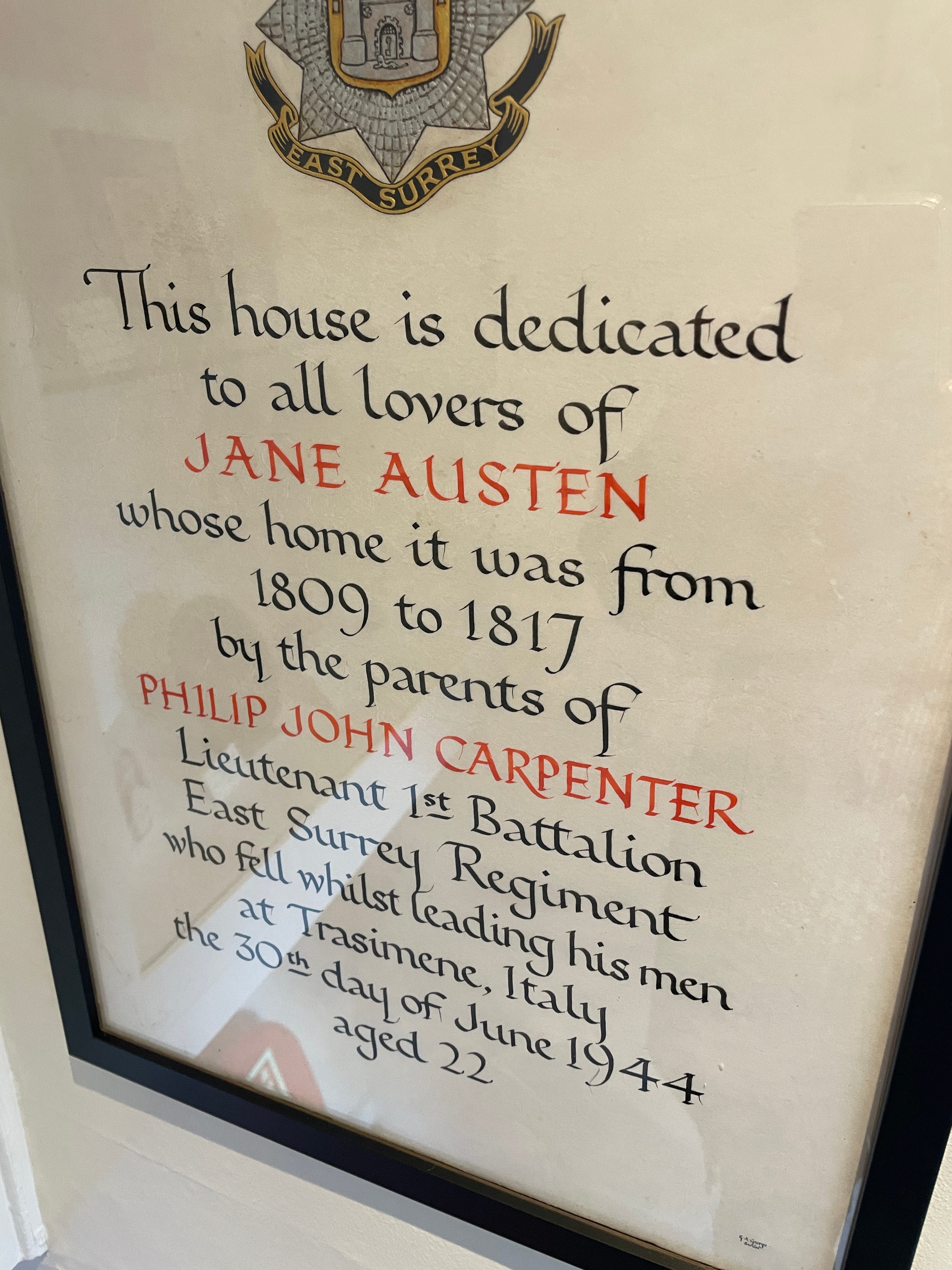
Before we walk up the road to the manor house, pause at a plaque in the far corner of an upstairs room. After Jane, Mrs. Austen, and Cassandra died, Edward of the manor house had no reason to keep Chawton Cottage and sold it to laborers. Their descendants occupied it until 1940. Miss Dorothy Darnell founded the Jane Austen Society then and began the process of buying the cottage. Not until after the war did they succeed, when Thomas Edward Carpenter bought it in memory of his son killed in the war. That plaque in the corner memorializes the young man.
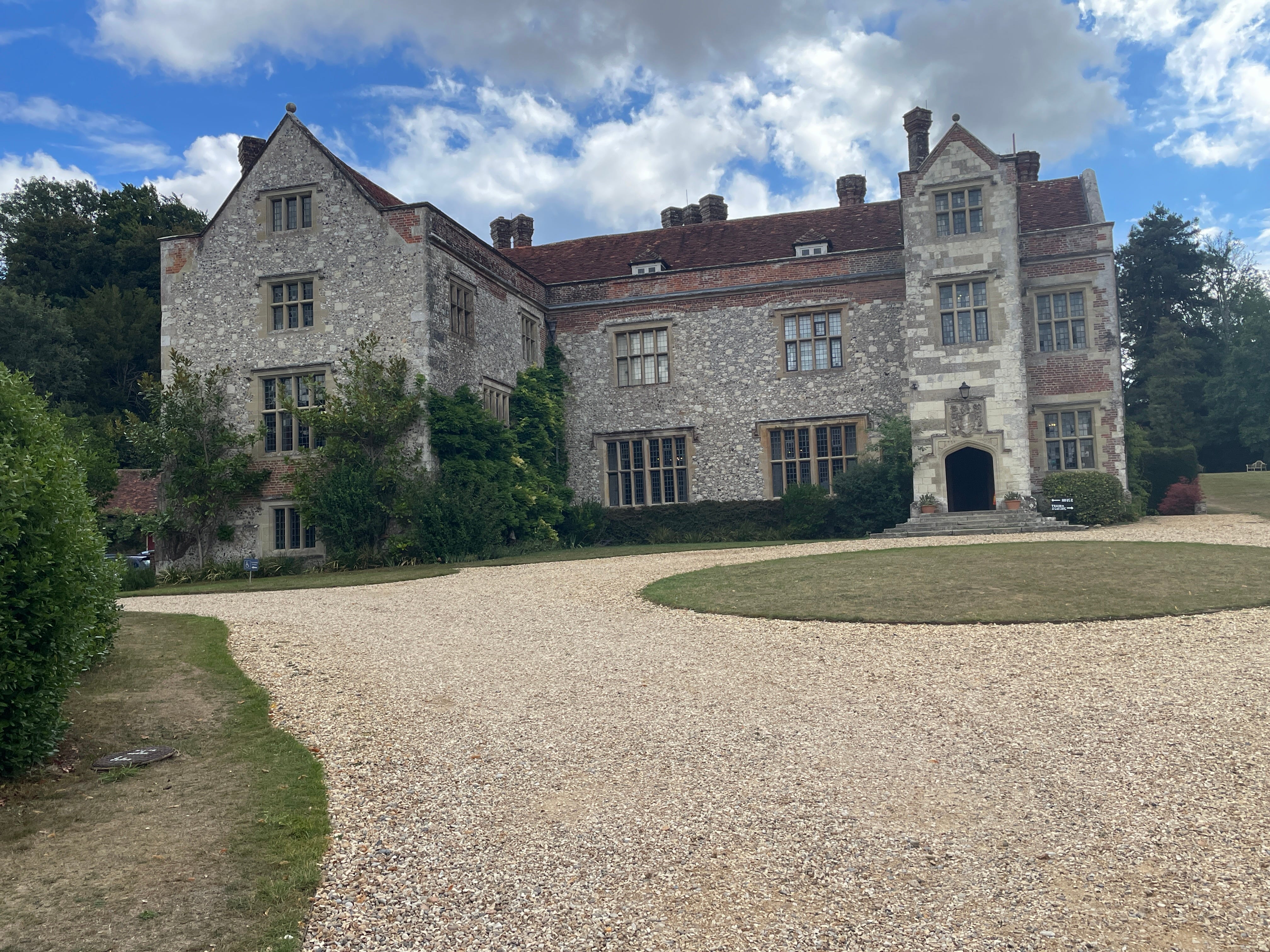
A fine pub awaits across the street, abutted by two B&B’s and a good coffee shop. A few homes line the road. Jane and her sister walked this stretch often, going up to the manor house to help with children, to explore the garden and woods, and to enjoy food and drink. Edward’s family made the pleasurable reverse trip when they walked down to Chawton Cottage. The manor house is impressive (it could have easily found its place in one of the 1995 films). But I was less interested, I admit, in the number of posted family trees acknowledging the Knight family’s long and distinguished place in the English aristocracy. What did make me dream, though, was those magnificent lawns and woods, cherishing in Persuasion those long walks between Anne Eliot and another of our navy heroes, Captain Wentworth.
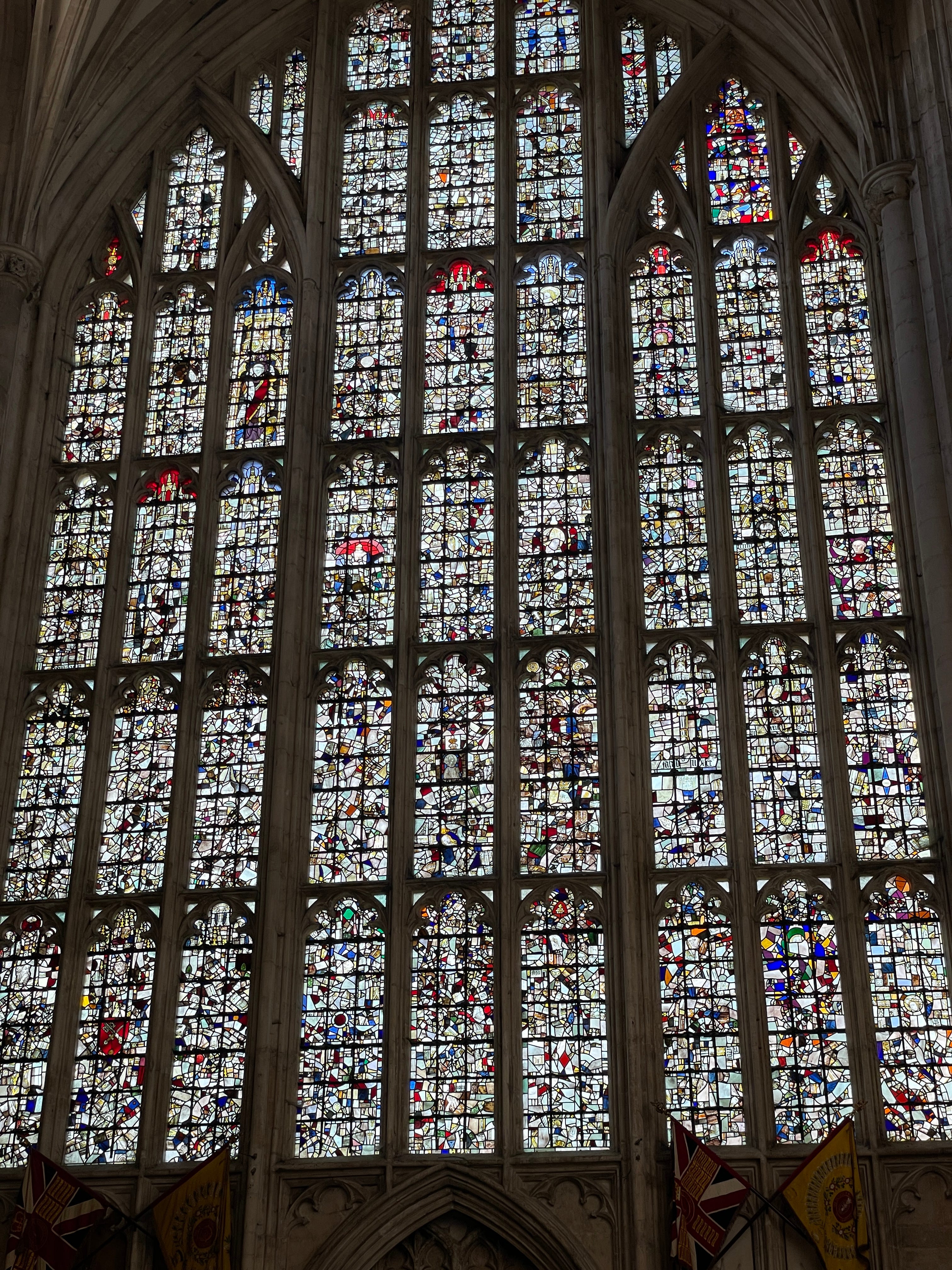
This entry reads like a travelogue, I acknowledge, but I would add that Winchester Cathedral is magnificent and has the graves of every measure of ruler from the Normans on. The Roundhead army sacked the inside and stole much of its treasure, but the townspeople were so offended they saved pieces of the west window. After the Restoration, the window was pieced back together over time—it is different, and it is glorious.
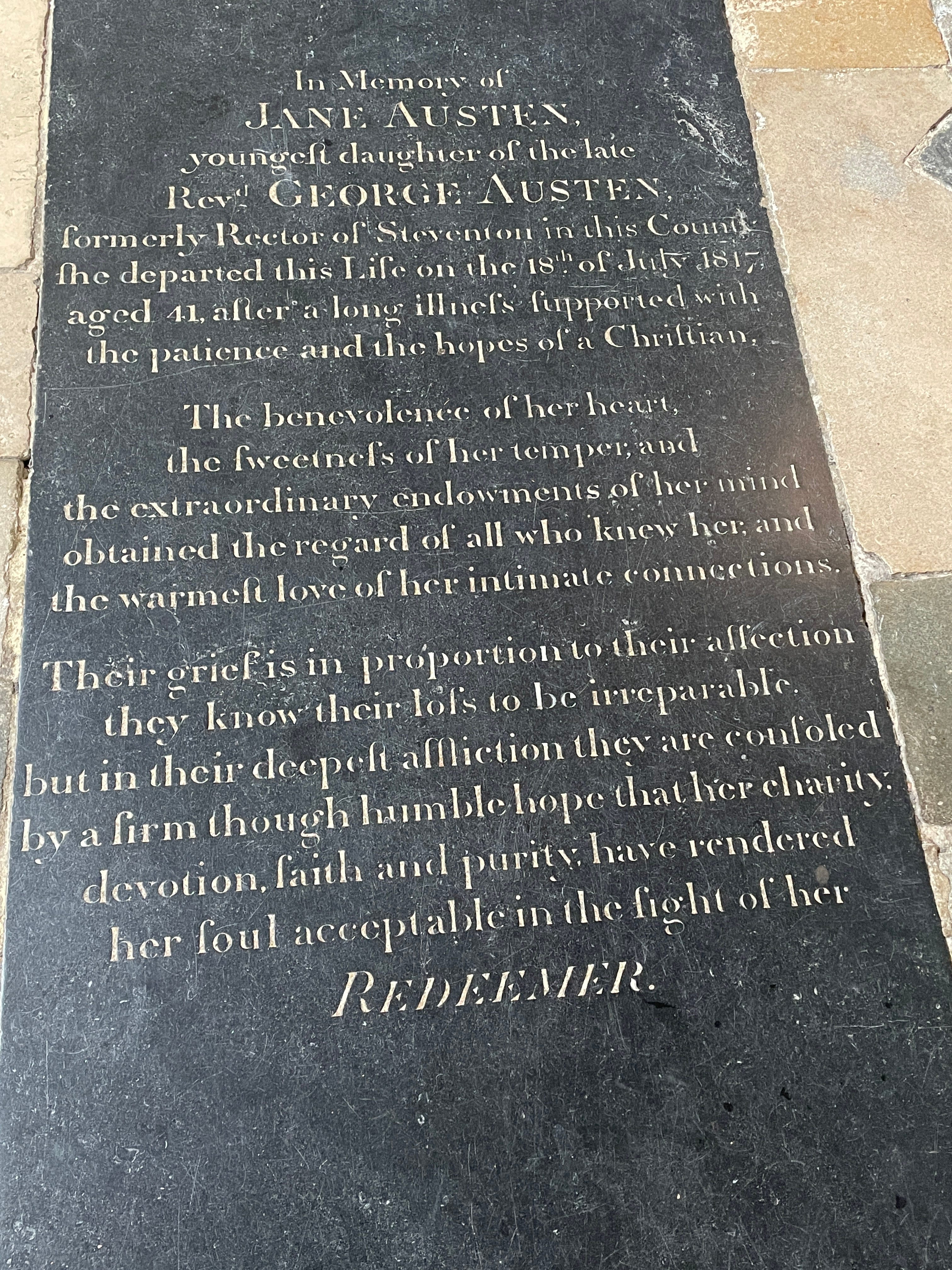
On the left aisle down the nave Jane Austen rests. Her brother arranged the early morning funeral before service began, and three attended (the church record has the date wrong). There is no mention of her writing in the burial plaque. Almost apologetically, a gold-lettered plaque on the nearby wall was placed later, when Jane was the Jane Austen we know and not simply the daughter, sister, aunt, and friend celebrated in 1817. I overheard some tour guides refer to the stained-glass window above that as “The Austen Window.” I looked closely. I confess it’s Saint Augustine, which is a stretch indeed.