

In 1994, the British Library commissioned and published Patrick O’Brian: Critical Appreciation and a Bibliography, edited by A.E. Cunningham. The book marked the culmination of O’Brian’s long journey to being taken seriously in literary circles. I picked it up some years ago out of curiosity. It includes essays from naval historians like N.A.M. Rodger and Brian Lavery, a study of Maturin’s medical world, two short stories by O’Brian himself, and several other essays by distinguished academics.
What sealed my purchase of the book, though, was the essay “Arms and the Man,” by none other than Charlton Heston.
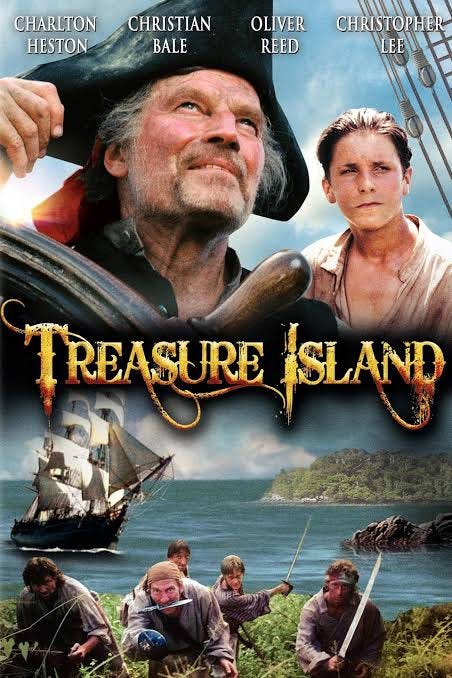
Heston’s inclusion in the volume is not as surprising as you might think because the actor had long been an admirer of O’Brian’s. The two men had first met in London in June 1990, when Heston was promoting Treasure Island. As Dean King, O’Brian’s biographer, puts it: “In Heston, O’Brian made an exception to his general dislike of America and Americans.”1
At their first meeting, Heston spoke glowingly of Aubrey and Maturin to O’Brian, and then over the next several years, he used his celebrity to speak glowingly of them to everyone else. The culmination of his efforts was an event with O’Brian at UCLA in 1995 at which Heston gave a dramatic reading of the pillory scene in The Reverse of the Medal.
So with that context, let’s dive into Heston’s “critical appreciation” of O’Brian. Nobody is snootier or more insistent on gate-keeping than academics, so I want to state up front that I am glad that Heston chose to express his enthusiasm for O’Brian in such a setting. As unusual as it is for an actor to be published in an academic book, I think it should be encouraged. The academy needs all the help it can get right now. Don’t you think the world needs more essays like Iggy Pop’s appreciation of Edward Gibbon in the journal Classics Ireland?
[That’s a real link to JSTOR! Click on it!]
Heston begins by directly comparing O’Brian and C.S. Forester. His conclusion is clear: “O’Brian is the better writer, ‘by a long sea mile’, as Long John Silver, one of the greats of all sea-going characters, put it.” (I don’t think that sentence means what Heston thinks it means, but whatever—we get the point.) Heston points out, correctly in my opinion, how important humor is to O’Brian’s writing, especially in contrast to Forester’s.
The title of Heston’s essay, “Arms and the Man,” comes next as he speculates about why the greatest writers have tended to write about land warfare, from Virgil to Shakespeare to Tolstoy. “Melville and Conrad, the greatest writers inspired by the sea, never took up Virgil’s challenge,” he writes. The implication is that O’Brian belongs in their ranks. One major reason is the verisimilitude of O’Brian’s dialogue. “This is surely what they were like [in the early nineteenth century],” Heston says. “Only an extraordinary writer can do that.”
The most entertaining parts of Heston’s essay are his pithy assessments of O’Brian’s cast of characters. His expertise as an actor is on display here, as he gets right to the heart of each. Here are a few highlights:
Barret Bonden is “the essence of the British ranker from the Wars of the Roses through Desert Storm.”
Preserved Killick is “an absolute Jewish mother of a man, nagging, sulking, forever complaining and conniving for the Captain’s good, as he sees it.”
Aubrey is “open, sanguine, a highly physical doer and shaker.”
Maturin is “reserved, intellectual, and secretive … the most complete doctor in fiction.”
Heston concludes the short essay with an important point about the friendship at the heart of the books. Lest anyone take the idea of their “particular friendship” to be an indication of something, uh, more than friendship, Heston emphasizes that both men share “a firm interest in women.” Methinks he doth protest too much, but in any case, Heston is right to emphasize the relationship as almost a character in its own right. Unlike other famous pairings (Holmes and Watson, Huck Finn and Jim2) in which the friendship is simply declared, O’Brian’s readers experience the friendship’s evolution as well as its highs and lows.
Thus ends Heston’s essay—just five pages. Iggy Pop’s essay on Gibbon is just three pages. Perhaps academics need to learn the importance of brevity from these famous interlopers. I’ll follow their lead.
Dean King, Patrick O’Brian: A Life Revealed (New York: Henry Holt, 2000), 295–96.
Of course, of course, Heston adds another word in front of Jim, which I won’t print. Perhaps relatedly, Heston’s politics went through an astonishing arc, from the March on Washington via Nixon to Reagan and the NRA…
Thanks for this observation, and for including the coda on Heston’s politics in the endnote. Fair’s fair.
I find it refreshing when actors, in particular, give due credit to writers. The under appreciated side of film, television and plays that they are, such commentaries give credit where credit is due. Good actors (Heston was good, if not necessarily great) know what they can and cannot do without good writing.
Sad that it was obligatory to note the strange narrative arc of Heston’s own story